


Residential dog training means your dog stays at the training centre for the length of the programme and learns commands not only during sessions but inside daily life. Planned sessions run every day under a trainer's supervision; the time in between goes to rest, play and socialising. At hand-over you work too: for the results to last at home, the owner takes part in an adaptation session.
What Is Residential Dog Training?
In the classic course model the dog comes to class a few hours a week and goes back to the same habits at home. In the residential model the dog stays at the facility during training. A learned behaviour is then repeated not only "at lesson time" but before meals, at the door, around other dogs and while resting. Dogs learn through repetition and context; a residential routine keeps that repetition consistent and uninterrupted.
This does not mean taking the dog away from home to "make it do things". A well-built residential programme starts with assessment, moves forward with a written plan and ends with a hand-over in which the owner takes part.
How Does Residential Training Work?
At our centre in Zekeriyaköy the process has five steps:
- Consultation: In a free consultation with the trainer we talk about your dog's situation, history and your expectations.
- Test: The dog goes through a character and behaviour analysis; age, temperament and behavioural history are seen in person.
- Plan and approval: The result is shared with you as a written report and training plan; the content and scope of the programme are settled here, and training does not begin until you approve.
- Training: The dog stays at the facility and sessions run under the trainer's supervision.
- Adaptation: At the end a written result report is prepared and, at hand-over, we work together so the results last at home.
No dog gets a programme without being tested. What is worked on and for how long is decided after this assessment; the dog's level also comes out in the test. You follow the process from My Account. You can find all of these steps on our dog training centre page.
What Does a Dog's Day Look Like in Residential Training?
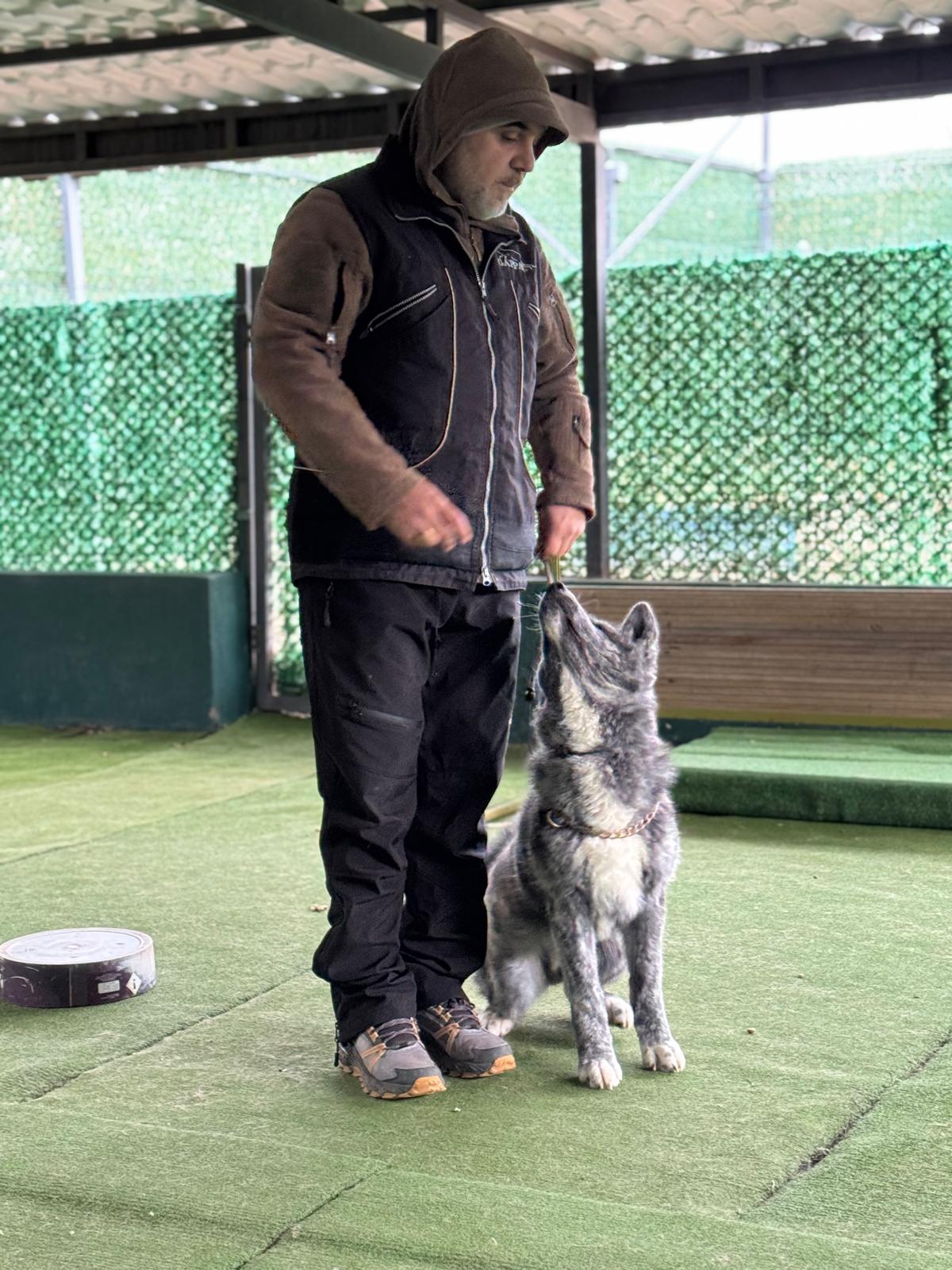
Your dog stays in its own raised suite. Planned training sessions run through the day; between sessions the dog rests, eats and spends time in the play areas. Commands do not stay a classroom-only lesson: waiting at the door, walking on a leash and coming when called settle into the daily flow. A day that follows the same order gives the dog a predictable setting, which makes learning easier, especially for anxious dogs and dogs that get distracted easily.
Short sessions and regular rest are the base of learning: a tired or overexcited dog cannot learn a new behaviour for good. That is why a good residential programme balances focused work with time to settle. The trainer adjusts the difficulty of a session to the dog's energy and response that day; progress decides when the next step comes, not the calendar.
Who Is Residential Training For?
The residential model is often chosen when:
- Owners make no progress at home despite consistent work.
- A busy schedule leaves no room for regular daily sessions.
- You want to change settled habits such as pulling on the leash, barking or jumping.
- You want basic obedience to settle quickly in an orderly environment.
- You want a dog with a behaviour problem assessed first in a controlled setting.
For puppies, training is planned in a way that suits their age; we covered the age stages in at what age dog training should start. Ask your vet about anything that worries you regarding vaccines and health.
Is Residential Training Right for Every Dog?
No, and it is fair to say so. Residential training is not a shortcut; the dog has to be able to adjust to a change of setting and the owner has to take part. If your dog struggles to settle in or the programme does not suit its health, the roadmap changes. That is why the decision is made together after the consultation and test; behaviour problems such as aggression, anxiety or disobedience are also part of this assessment.
How Do Results Last at Home After Residential Training?
The most common misunderstanding is that the dog will "come back trained" and the job is done. A command only means something together with the person who uses it. That is why the adaptation work the owner does at hand-over is part of the process. To make results last at home:
- Give the same command with the same word: Everyone at home should use the same signal.
- Apply the rules from day one: Do not loosen the routine you learned from the trainer once the dog is home.
- Repeat short and often: A few minutes a day lasts longer than one long weekly session.
- Reward the behaviour you want: Good behaviour settles in when it is noticed.
- Be patient: After returning home the dog may seem to "forget" some commands for a while; this is temporary.
You can read how basic commands work in what is basic obedience training and find everyday habits in top 10 dog training tips.
How Is Residential Dog Training Priced?
The total is made of separate items: the training fee, boarding and any extras. During training, boarding is given at a careful-care standard with no extra charge for it; only the standard nightly boarding rate applies. The training fee is set after the test and plan. For current items see the price list.
How Should You Prepare Before Residential Training?
Preparation makes the process run smoothly. When you come to the consultation, think about the following and share it with the trainer:
- Your dog's history: Where it came from, whether it had training before and in which situations it struggles.
- Health information: Vaccine records, known conditions and any medicines; ask your vet first about anything uncertain.
- Daily routine: Meal times, sleeping habits, sounds and settings it fears.
- Your goal: A concrete goal instead of "better": walking calmly on a leash, coming when called, not jumping on guests.
- Everyone at home: Talk as a family about who will apply the rules, and how, once the dog is back.
A clear goal helps the plan to be built correctly and lets you see in the written result report what was achieved.
What Is the Difference Between Residential Training and Training at Home?
They are not alternatives to each other; they answer different needs. Training at home lets the dog work in its own setting beside its owner, but consistency depends on the owner's time and patience. In residential training the work is continuous and under the trainer's control; the dog repeats the right behaviour faster and with fewer distractions. In return, the real triggers of the home setting (doorbell, guests, a neighbour's dog) still need to be worked on at home. So both paths rely on the owner taking part, and the best result comes from residential work followed by regular repetition at home.
Which Mistakes Are Common in Residential Training?
- Not trusting the test and plan: Starting without a clear goal leaves expectation and result out of step.
- Skipping the adaptation at hand-over: Commands need to be used the same way at home.
- Loosening the rules once home: Gains are most fragile in the first weeks.
- Expecting the full result at once: Settling into the home setting and a short "forgetting" phase are normal.
- Looking for punishment-based methods: They raise fear and anxiety; positive reinforcement gives lasting results.
When Is Professional Support Needed?
If any of these sounds familiar, it is the right time for professional support:
- No progress despite several weeks of consistent work.
- Your dog growls, lunges or tries to bite.
- There are signs of intense fear, anxiety or being unable to stay alone.
- You want to change the routine at home but do not know where to start.
At our dog training centre we first get to know and assess your dog. If you suspect a health issue, ask your vet first.
Frequently Asked Questions
What is residential dog training?
It is a training model where the dog stays at the training centre during the programme and learns commands not only in sessions but inside daily life. Sessions run under a trainer's supervision and an adaptation session with the owner takes place at hand-over.
How does residential training start?
It starts with a free consultation, then the dog goes through a character and behaviour test. The result is shared as a written report and training plan; training does not begin until you approve.
Will my dog follow commands at home after training?
Yes, but the owner also has to use the commands the same way. That is why we do an adaptation session together at hand-over. Consistent, rewarded repetition at home decides how long results last.
Is residential training suitable for every dog?
The same path does not suit every dog. Age, temperament and health are assessed in the consultation and test and the roadmap is set accordingly. If you have any doubt about health, ask your vet.
How is the fee calculated?
The total is made of the training fee, boarding and any extras. Only the standard nightly boarding rate is charged for boarding. The training fee is set after the test and plan; current items are in the price list.
Can I follow the process?
Yes, you follow the process from My Account. A written result report is prepared at the end.