


A dog jumping on people is usually a greeting and a request for attention: the dog has learned that when it jumps, it is looked at, spoken to or touched. The most effective way to stop this behaviour is to make jumping unrewarding and instead reward greeting with all four paws on the floor or while sitting. When the dog jumps, you calmly turn your back and withdraw attention; the moment all four paws touch the floor, you give attention and a reward in a calm voice. Below we explain why dogs jump, a step-by-step method, situations with guests and on walks, and the most common mistakes.
Why Do Dogs Jump on People?
From the dog's point of view, jumping is usually a logical behaviour. The most common reasons are:
- Greeting: Dogs greet each other by sniffing face to face. Because a person's face is up high, the dog tries to reach it.
- Seeking attention: Looking at a jumping dog, talking to it, even pushing it away is attention for the dog. Behaviour that brings attention is repeated.
- Excitement and pent-up energy: A dog that does not move enough during the day or is left alone for long periods greets homecomings with overflowing excitement.
- Reinforcement in puppyhood: A puppy found cute and picked up when small expects the same welcome when it grows up.
- Unease: Some dogs lean on or jump at people to settle themselves in uncertain or crowded situations.
Why Should Jumping Be Stopped?
Jumping may look like a harmless show of affection, but a large and strong dog can knock over a child or an elderly person, leave scratches with its claws and dirty clothes. With small breeds the risk seems lower, but a dog behaving the same way towards guests and people on the street both bothers others and makes the dog's excitement harder to manage. The aim is not to suppress the dog's affection, but to teach it to show that affection in a way that is safe for everyone.
How to Stop a Dog Jumping on People Step by Step?
- Make jumping unrewarding: When the dog jumps, do not talk, do not look and do not push. Calmly turn your back or fold your arms across your chest. Jumping should have no result at all for the dog.
- Reward four paws on the floor: The moment the dog puts its paws down, turn around, praise it in a calm voice and give the treat on the floor or at the level of the dog's mouth. Holding the treat up high invites the dog to jump again.
- Teach what to do instead: Show the dog what to do instead of jumping. The most practical option is sitting: no sit, no greeting. We explain how to teach this cue step by step in our article on teaching your dog to sit and lie down.
- Bring greetings down to the dog's level: Bend down or crouch when you pet the dog. When your face comes down to the dog's level, its need to reach upwards decreases.
- Keep homecomings calm: When you come home, skip the enthusiastic welcome for the first few minutes. Put down your bag, take off your shoes; when the dog has calmed down and all four paws are on the floor, say hello.
- Rehearse on the lead: Ask a familiar person for help. With the dog on its lead, the person approaches slowly; if the dog starts to jump, the person takes a step back, and when the dog sits, they approach again and pet it. Repeat this rehearsal in short, frequent sessions.
- Be consistent: Everyone in the house must apply the same rule. When one person rewards jumping, the dog learns that jumping sometimes works and the behaviour becomes more persistent.
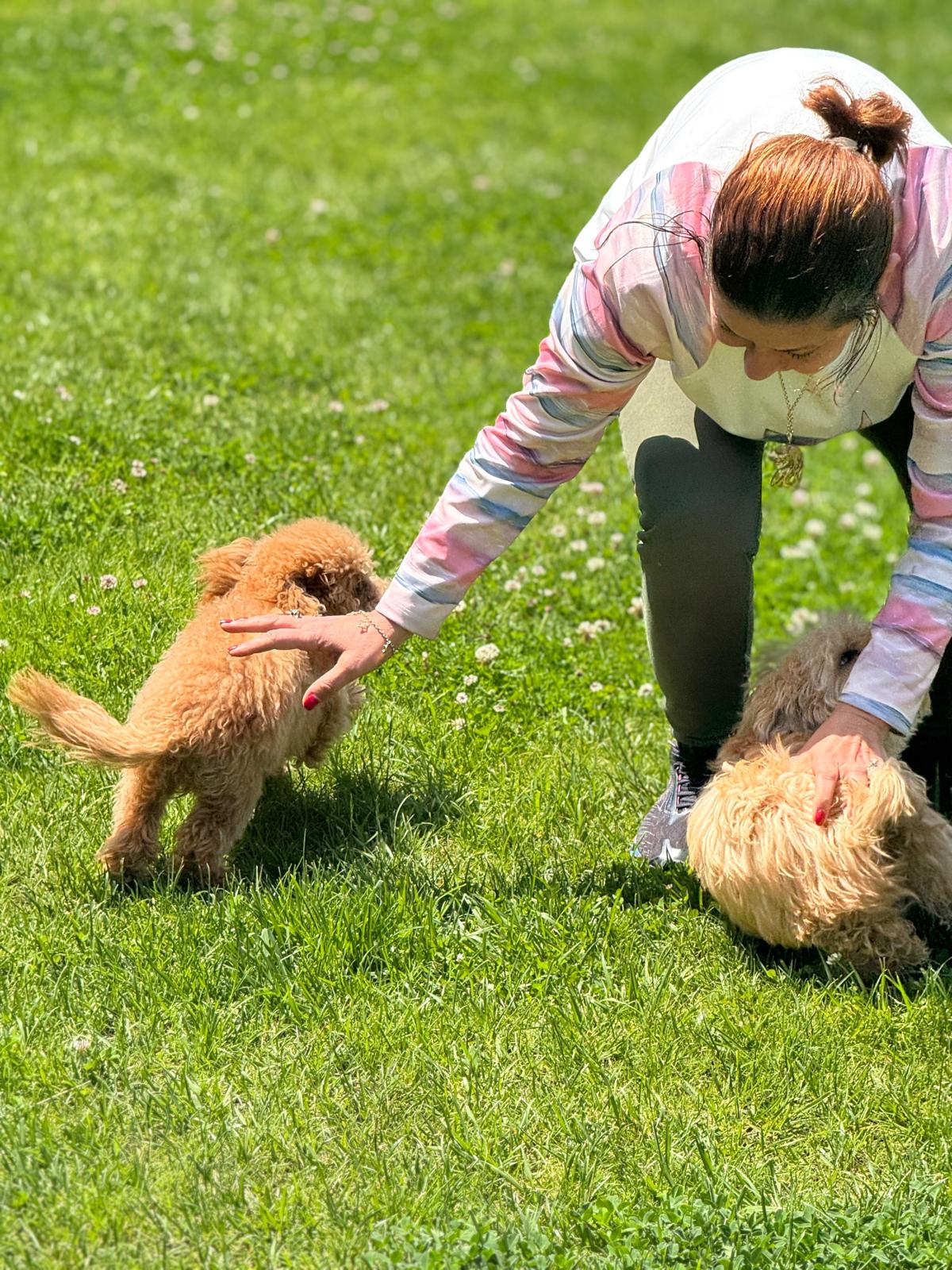
This method relies on rewarding the wanted behaviour and leaving the unwanted behaviour without result. We explain in detail why giving the reward at the right moment matters so much in our article how do dogs learn. In the first days the behaviour may briefly increase, as the dog pushes the old method harder. If you stay consistent, this phase passes.
What Should Change in the Daily Routine?
Jumping is often not only a training issue but also a question of how the dog spends its day. A dog that cannot burn off its energy, is left alone for long hours or gets little stimulation during the day uses the moment it meets people as a chance to release the excitement it has built up. Regular walks suited to your dog's age and breed, calm outings with chances to sniff, short training sessions and puzzle games noticeably lower its level of excitement. Playing when the dog is calm, rather than right before homecomings, also helps greetings go more smoothly. As the daily routine settles, the steps above give results much faster.
What to Do If Your Dog Jumps on Guests?
The doorbell and a new face are among the most exciting moments of a dog's day. Preparing before guests arrive makes things much easier:
- Put the lead on beforehand: When you are expecting guests, put your dog's lead on; this way you can guide the dog calmly at the door instead of holding it back.
- Explain the rule to guests: Ask them to turn their backs if the dog jumps and to pet it when it sits. A guest petting a jumping dog undoes all the work.
- Keep treats near the door: Reward the dog immediately when it sits at the door or keeps all four paws on the floor.
- Use a separate area if needed: Keep a very excited dog behind a baby gate or in a separate room until guests have settled in; introduce them in a controlled way once the dog has calmed down.
What to Do If Your Dog Jumps on Strangers During Walks?
Not everyone on the street wants to greet a dog, so do not allow greetings without permission on walks. Start at a distance where the dog can stay calm; when a person approaches, draw the dog's attention to yourself and reward it when it looks at you. Reduce the distance gradually as the dog progresses. Keeping the lead short and tight can increase excitement, so teaching loose lead walking also helps; for this, see our article on leash pulling training.
What Are the Most Common Mistakes?
- Kneeing, pushing or stepping on the dog's paws: These reactions can frighten and injure the dog and damage its trust in you. Some dogs take being pushed as play and jump even more.
- Shouting or repeating "no": Voice is attention too. An excited dog often takes shouting as joining the game.
- Being inconsistent: Allowing jumping when you are in a tracksuit and scolding when you are dressed up confuses the dog. The rule must be the same in every situation.
- Only forbidding: Trying only to stop jumping without teaching the dog what to do instead makes the process longer.
- Not meeting the dog's energy needs: A dog that does not get enough walks, play and mental activity releases its excitement by jumping on people.
How to Prevent Jumping in Puppies?
The easiest way is to start before the behaviour becomes established. From the first day, pet your puppy while all four paws are on the floor, crouch when greeting and briefly withdraw attention when it jumps. In puppies, excited jumping is often seen together with mouthing and biting; our article on how to stop puppy biting offers guidance on this. If you notice a sudden change in behaviour, consult your veterinarian about the possibility of pain or a health problem.
When Is Professional Support Needed?
If one of the following sounds familiar, it is time to talk to a trainer:
- Despite weeks of consistent work, the jumping is not decreasing.
- Jumping comes with biting, growling or pulling at clothes.
- The dog risks knocking over a child, an elderly person or someone with limited mobility.
- You cannot control the excitement of your large and strong dog at the door and on the street.
At our dog training centre the process starts with a free consultation; we then take your dog for a character and behaviour test and share the result as a written report and training plan. Which behaviour is worked on in which order is decided in the assessment. Training does not start without your approval, and at handover an adaptation session is done together with you. For current items, see the price list.
Frequently Asked Questions
How long does it take to stop a dog jumping on people?
It depends on the dog's age and energy and on how long the behaviour has been rewarded. When everyone in the house is consistent, most dogs show a clear decrease within a few weeks; exciting situations such as guests and outdoor settings require longer work.
Should I knee my dog when it jumps on me?
No. Kneeing, pushing or stepping on its paws can frighten and injure the dog and damage its trust in you; some dogs also take it as play. Turning your back to withdraw attention and rewarding four paws on the floor is more effective.
Why does my dog only jump on guests?
A guest is a new and exciting stimulus for the dog, and guests often pet the jumping dog, rewarding the behaviour without realising it. Ask guests to follow the same rule and work in a controlled way on the lead at the door.
Is jumping a problem in small breed dogs too?
Jumping by a small dog may seem less risky, but it is the result of the same learning and can bother children, elderly people or guests. The rule should be the same regardless of the dog's size.
What should I teach my dog instead of jumping?
The most practical option is sitting: no sit, no greeting. Teach the sit cue first in a calm setting, then carry it over to exciting moments such as the door, guests and walks.
My dog jumps and bites when excited, what should I do?
Excited mouthing is common in puppies and young dogs; withdraw attention immediately and give the dog a chance to calm down. If the biting is strong, comes with growling or is seen in an adult dog, talk to a trainer.