


Sit and down are taught not by touching the dog’s body but by guiding it with the reward in your hand: when you move the treat from above the dog’s nose back over its head, the dog sits by itself; when you lower the treat from its nose to the floor, it lies down; you give the reward the moment it finds the right position. You add the word only after the dog performs the movement confidently. Below we explain both commands step by step, the most common mistakes and how to make the commands reliable in every setting.
Why Are Sit and Down Important?
Sit and down are the building blocks of basic obedience. Most everyday situations rely on these two commands: waiting at the door, taking food calmly, not jumping on guests, staying calm during a vet examination or resting next to the owner in a crowded place. A dog cannot sit and jump at the same time; that is why sit is one of the most useful behaviours to put in place of unwanted ones.
Down, in turn, helps the dog stay calm for longer. A dog that learns to lie down and wait in a café, a waiting room or at home in the evening is a more relaxed companion for both its owner and the people around it. Both commands can be taught in a short time; the real effort is making them reliable in different settings.
What Do You Need Before You Start?
- Small, valuable treats: Small bites your dog loves and can swallow quickly. Large treats slow the practice down.
- A calm setting: The first sessions are done indoors, where there are the fewest distractions.
- A non-slip surface: For down, a comfortable surface such as a rug or mat makes lying down easier for the dog.
- One word, one signal: Everyone at home should use the same word ("sit", "down") and the same hand signal.
- Short sessions: A few minutes several times a day is more effective than long sessions. Finish with a good repetition before the dog gets tired.
How to Teach Your Dog to Sit, Step by Step?
- Show the treat at its nose: While your dog is standing in front of you, hold a treat between your fingers and bring it close to its nose.
- Slowly move your hand back: Move the treat slowly from just above the dog’s nose towards the back of its head. As the head rises, the rear naturally lowers to the floor.
- Catch the right moment: The moment the dog sits, say "yes" or use a short praise word and give the treat immediately. Timing is the most important part of the method.
- Repeat and make the hand movement smaller: After a few sessions, make the same movement without a treat in that hand and give the reward from your other hand when the dog sits. Over time the hand movement becomes a small signal.
- Add the word: Once the dog sits confidently to the hand signal, say "sit" just before the signal. The word becomes the name of the movement.
- Add a short wait: Wait a second or two before giving the treat, then gradually extend the time. If the dog gets up, that is fine; shorten the time and try again.
How to Teach Your Dog to Lie Down, Step by Step?
- Start from the sitting position: While your dog is sitting, show the treat at its nose.
- Lower your hand to the floor: Slowly lower the treat from its nose to the floor between its front paws. As the dog follows your hand with its nose, its front legs slide forward and it lies down.
- Reward when it lies down: The moment its elbows touch the floor, say your marker word and give the treat on the floor, between its two paws.
- Progress in small steps if needed: If the dog does not lie down fully, also reward it for lowering its head or sliding its front legs a little. Approaching the goal piece by piece gives much faster results than forcing the dog.
- Add the word and the duration: Once the movement is solid, say "down" just before the signal; then gradually increase the waiting time before the reward.
- Choose a release word: Tell the dog it may leave the position with a word such as "okay" or "free". This way the dog learns from you when to get up.
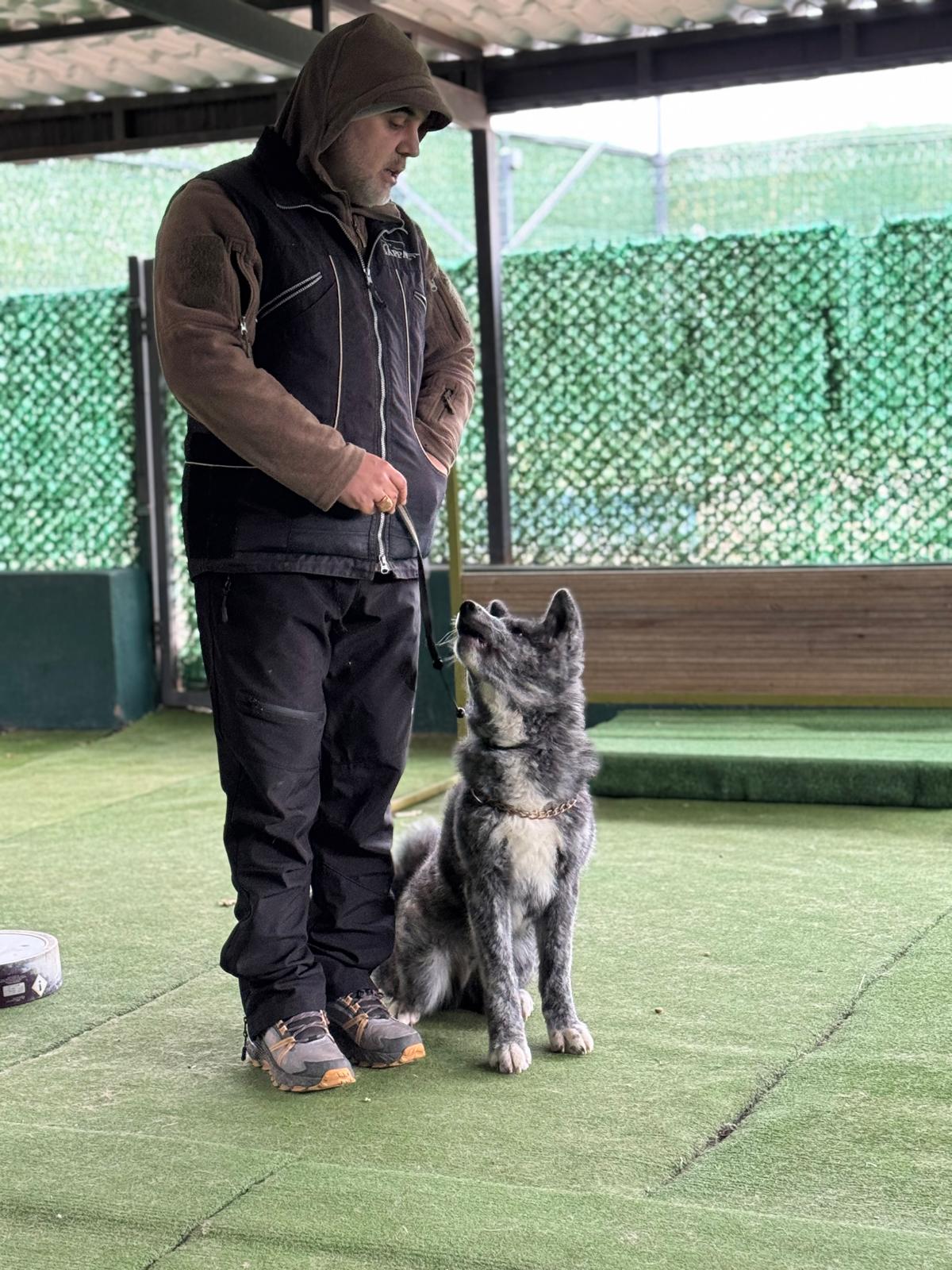
Lure-and-reward lets the dog find the position by itself. A dog learns a movement it found with its own body faster and remembers it longer. We explain the learning principles behind this in detail in our article how do dogs learn.
Why Won’t My Dog Sit or Lie Down?
A dog that does not perform the command is usually not stubborn; it has not yet fully understood what is being asked, or the conditions at that moment make the task harder. The most common reasons are:
- The setting is too hard: A command newly learned at home is tested in a crowded park or while guests are arriving.
- The word did not come before the signal: The dog has learned the hand movement but has not yet linked the word to the movement.
- The reward comes late: If the treat is given after the dog gets up, the dog learns getting up, not sitting.
- The surface is uncomfortable: Many dogs do not want to lie down on cold, wet or slippery ground.
- The dog is tense: For some dogs lying down is a vulnerable position; an uneasy dog may find it hard to lie down in an unfamiliar place.
If a dog that used to sit or lie down easily starts avoiding these movements, first consult your veterinarian about the possibility of pain or another health problem.
What Are the Most Common Mistakes?
- Pushing the dog into position: Pressing on its rear or shoulders creates resistance and tension; the dog learns to escape the pressure, not the movement.
- Repeating the command again and again: "Sit, sit, sit" teaches the dog that the word counts on the third time. Say it once; if it does not work, make the task easier.
- Adding the word too early: A word said before the dog knows the movement does not gain meaning.
- Always showing the treat in your hand: The dog learns to work only when it sees the treat. Make the treat invisible at an early stage.
- Forgetting the release: If the dog does not know when to leave the position, it gets up on its own; that is why the waiting time does not grow.
When Can a Puppy Learn Sit and Down?
Puppies can be introduced to sit as a game from their first days at home; lure-and-reward is a gentle and suitable method for puppies too. Sessions are kept very short to match the puppy’s attention span. These commands can also easily be taught to adult dogs; with a dog that was previously trained by force, starting from scratch with a new word and rewards often makes the work easier. You can find when training can start in our article at what age does dog training start.
How Do You Make Sit and Down Last?
What makes a command last is spreading it into daily life. Ask your dog to sit before you put its food down, before you open the door and before you clip on the leash. Use down in the evening in front of the television or while resting on a bench during a walk. In every new setting, shorten the distance and duration and start easy, then make it harder step by step.
Sit and down also form the basis of the other basic commands. For the next step, see our article on teaching your dog to come when called, and for problems on walks, our article on loose leash walking training. We explain basic obedience as a whole in our article what is basic obedience training.
When Is Professional Support Needed?
If one of the following sounds familiar, it is time to talk to a trainer:
- Despite regular practice, your dog does not respond to any command outside the home.
- Your dog growls, runs away or becomes tense when guided or touched.
- Behaviours such as jumping on guests or bolting through the door cannot be controlled with commands.
- Several behaviour problems are happening at once and you do not know where to start.
At our dog training centre the process starts with a free consultation; we then take your dog for a character and behaviour test and share the result as a written report and training plan. In which order and in which settings the basic commands are worked on is decided in the assessment. Training does not start without your approval, and at handover an adaptation session is done together with you. For current items, see the price list.
Frequently Asked Questions
How many days does it take to teach a dog to sit?
Most dogs start doing the sit movement within a few days with lure-and-reward. Making the command reliable in different settings and around distractions takes weeks of short, regular practice.
Should I teach sit or down first?
Sit is usually taught first. It is the easier movement, and in most dogs the down is practised starting from the sitting position.
Should I push my dog’s rear down to make it sit?
No. Pushing a dog into position can create resistance, tension and even fear. Guiding the position with a reward so that the dog finds it by itself gives a more lasting result.
My dog sits at home, why not outside?
Dogs remember a behaviour together with the setting in which they learned it. Smells, sounds and movement outdoors distract them; in every new setting you need to start again from easy steps and with a more valuable reward.
When can I reduce the treats?
Once your dog performs the command on the first cue in different settings, you can switch from rewarding every time to rewarding now and then. Rewards such as praise and play always continue.
What should I do if my dog struggles or gets restless when lying down?
Switch to a soft surface and do not force the practice. If a dog that used to lie down easily now struggles to do so or shows signs of pain, consult your veterinarian.