


Dog aggression most often comes from fear, pain, resource guarding or a lack of socialisation, and it is the dog's way of saying "stay away from me". With aggression towards people or other dogs, the first thing to do is keep everyone safe, then find the cause of the behaviour and reintroduce the dog to its triggers in small, controlled steps. Punishment does not solve the problem; it often raises the risk by suppressing the warning signs. Below we explain the signs, the causes, what to do step by step and when professional support is needed.
What Is Dog Aggression?
Aggression is the general name for behaviours aimed at driving a threat away, such as growling, lifting the lips, lunging while barking, snapping at the air and biting. For dogs these behaviours are a form of communication: the dog is uncomfortable with a situation and wants it to end. That is why aggression is not a character flaw but a reaction the dog has learned so far and that has worked for it.
The direction of the aggression matters. Some dogs react only to strangers, some to people in the family, and some only to other dogs. Who the dog reacts to, in which situation and at what distance forms the basis of the plan.
What Are the Signs of Aggression?
Dogs usually give a series of warnings before they bite. Noticing these signs early is the most effective way to prevent a dangerous moment:
- Early signs: Turning the head away, lip licking, yawning, showing the whites of the eyes, pinning the ears back.
- Tension: A stiff body, freezing, a fixed stare, a tail held high and tense.
- Clear warnings: Growling, lifting the lips to show the teeth, raised hackles.
- Final stage: Snapping at the air, lunging, biting.
When the early signs are ignored or growling is punished, the dog may learn to skip these steps. In most cases described as "it bit without any warning", the warnings were actually given but not noticed.
Why Does a Dog Attack People?
- Fear: Strangers, children, people with hats or sticks, sudden movements. A frightened dog that cannot escape switches to defence.
- Resource guarding: A food bowl, a bone, a toy, a bed or a particular person. The dog is wary of losing something it values.
- Pain and discomfort: A dog in pain may react sharply to being touched, lifted or groomed.
- Sensitivity to handling: Moments such as nail trimming, bathing or putting on the leash may have been paired with bad experiences.
- Territorial defence: Reactions towards people approaching the door, the garden or the car.
Why Does a Dog Attack Other Dogs?
The most common source of aggression towards dogs is fear and a lack of socialisation. A dog that did not have positive experiences with different dogs as a puppy finds it hard to read other dogs' body language. Reactions that appear on the leash are also very common: the leash takes away the dog's option to move away, and the dog barks and lunges to create distance. Sharing toys or food, a previous fight and play getting out of hand can also trigger tension between dogs.
Leash reactivity is often intertwined with walking habits. A tense, constantly pulled leash increases the dog's stress; our loose leash walking training article can help with this.
What to Do With an Aggressive Dog? Step by Step
- Make things safe first: Keep the dog away from its triggers for now. Let it rest in a separate room when guests come, move walks to quiet hours, and never leave children with the dog unsupervised.
- Have a health check: Especially if the aggression is new or appears when the dog is touched, consult your vet about the possibility of pain or an illness.
- Note the triggers: Who does it react to, where, at what distance and in which situation? A few days of notes often reveal a clear pattern.
- Work below the threshold: Find the distance at which the dog can see the trigger and still stay calm. All practice starts at this distance; if the dog barks or stiffens, you are too close.
- Pair the trigger with something good: Give a reward the dog loves the moment it sees another dog or a stranger; when the trigger disappears, the reward stops too. Over time the trigger starts to mean "something good is coming".
- Teach a behaviour to do instead: Such as looking at you, coming to you or turning back with you. A reliable recall is the easiest way to take the dog out of a difficult moment.
- Reduce the distance gradually: If the dog is comfortable at its distance, move a little closer in the next session. If you see a reaction, go back to the previous step.
- If needed, introduce a muzzle positively: A muzzle is a safety tool, not a punishment. When introduced step by step, for short periods and with a reward inside, the dog accepts the muzzle comfortably.
We explain why this method works, that is how dogs link a situation with emotions, in detail in our how do dogs learn article.
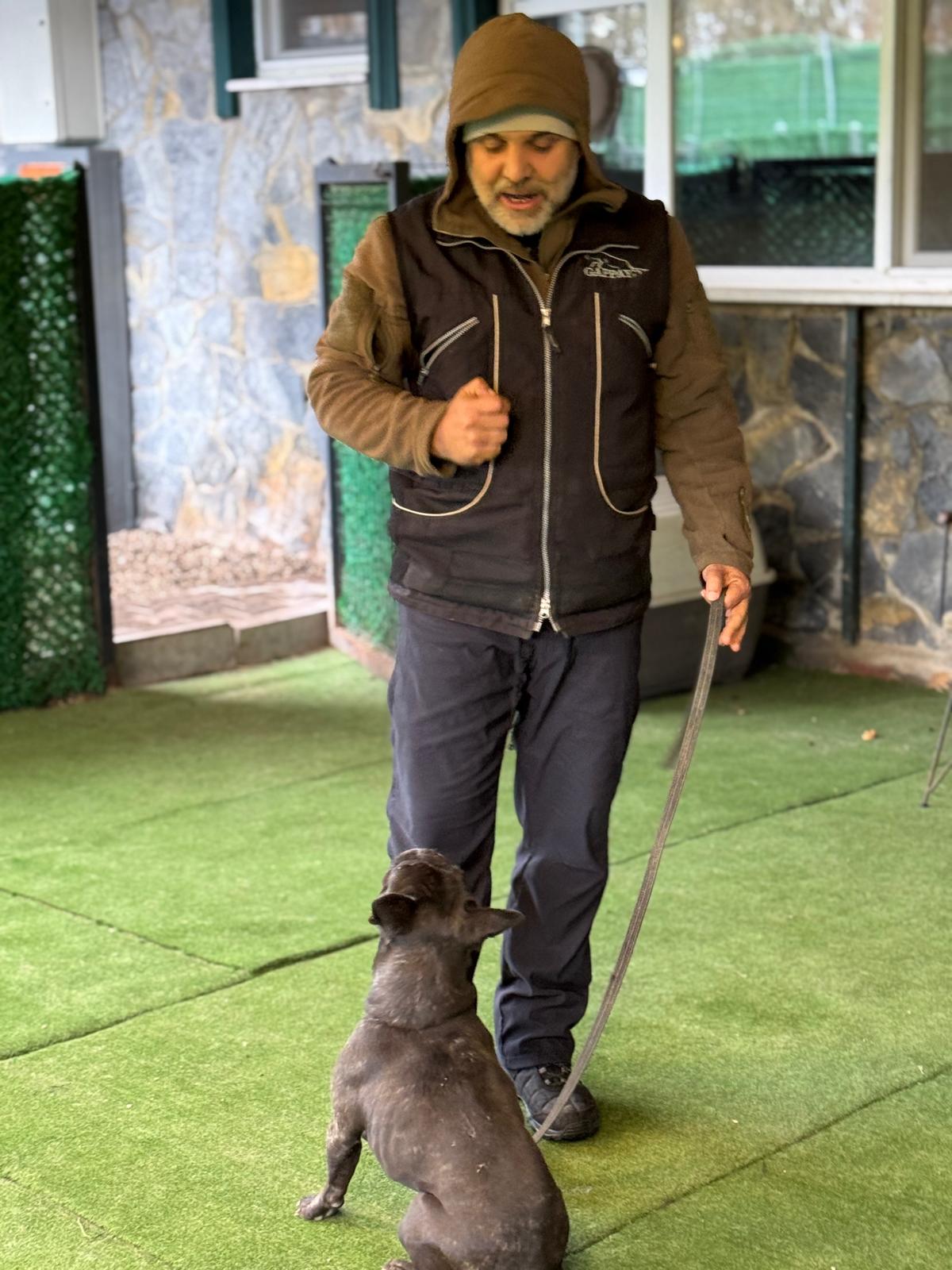
How Should Daily Management Look at Home?
As important as training is preventing the dog from meeting its triggers every day and reinforcing its reaction again. Every reaction makes the behaviour a little more of a habit. That is why the household routine is also part of the plan during the work:
- A resting area: The dog should have a calm corner of its own where no one disturbs it. Children and guests in particular should not approach this area.
- Valued items: Bones and toys of a dog that guards resources should not be left lying around at tense times; food should be given in a quiet place without disturbance.
- A predictable routine: Regular times for walks, meals and rest lower the dog's overall stress level.
- Mental and physical fulfilment: Sniffing walks, short training games and suitable chew items help release built-up tension.
Which Mistakes Should Be Avoided?
- Punishing growling: The warning disappears but the discomfort stays; the dog may learn to bite without warning.
- Forcing the dog to face what it fears: Pushing it into a crowd or among other dogs "so it gets used to it" usually makes the reaction bigger.
- Harsh physical methods: Pinning the dog down, yanking the leash or shouting increases fear and aggression.
- Different rules in the family: When not everyone follows the same rule, the dog gets confused and progress slows down.
- Ignoring a health cause: Pain-related aggression does not fully improve with training until the pain is dealt with.
Can Aggression Be Prevented in Puppies?
Puppyhood is the most valuable period for prevention. In this period, controlled and positive introductions to different people, calm and fully vaccinated dogs, different sounds and settings reduce fear-based reactions later on. Puppies biting hands during play is mostly play biting and is not the same as aggression; still, the puppy needs to learn to use its mouth gently. You can find when training can start in our at what age does dog training start article.
When Is Professional Support Needed?
Aggression is the riskiest behaviour problem to try alone at home. If one of the following sounds familiar, do not put off talking to a trainer:
- Your dog has bitten a person or another dog, or came very close to it.
- There are children at home and your dog gets tense around them.
- Reactions are becoming more frequent, more intense or appear without warning.
- There is guarding behaviour towards someone in the family, the food bowl or belongings.
- Walks, having guests or vet visits can no longer be done safely.
At our dog training centre we do not turn away behaviour problems such as aggression; they are the core of training. The process starts with a free consultation; we then take your dog for a character and behaviour test and share the result as a written report and training plan. When needed, work is carried out in a separate, controlled area. Which method is used and in what order is decided in the assessment; training does not start without your approval. You can read how behaviour programmes work in our behaviour correction training article and find the current items in the price list.
Frequently Asked Questions
Can an aggressive dog be fixed with training?
In most cases aggressive behaviour can be clearly reduced and brought to a point where it can be managed safely. The outcome depends on the cause of the behaviour, how long it has been going on, the dog's temperament and how much the family takes part in daily practice. That is why an assessment comes first instead of a firm promise.
Should I punish a dog that growls?
No. Growling is a warning that tells you the dog is uncomfortable. A punished dog may stop warning, but the discomfort does not go away, which raises the risk of a bite without warning. The right approach is to move the dog away from what makes it growl and find the cause.
My dog only attacks other dogs when on the leash, why?
The leash takes away the dog's option to move away. A dog that is wary of another dog may try to create distance by barking and lunging when it cannot escape. Working at a safe distance and pairing the other dog with a good experience reduces this reaction.
Can aggression be caused by pain?
Yes. If aggression started suddenly in a previously calm dog, or the dog reacts when a certain part of its body is touched, first consult your vet about the possibility of pain or a health problem.
Should I use a muzzle for an aggressive dog?
In risky situations a muzzle is a tool that increases safety, not a punishment. The dog should be introduced to the muzzle step by step and with rewards. A muzzle does not fix the behaviour; it keeps everyone safe while training goes on.